
EU Inc.: Company formation in 48 hours for €100
Corporate
International
07 September 2026
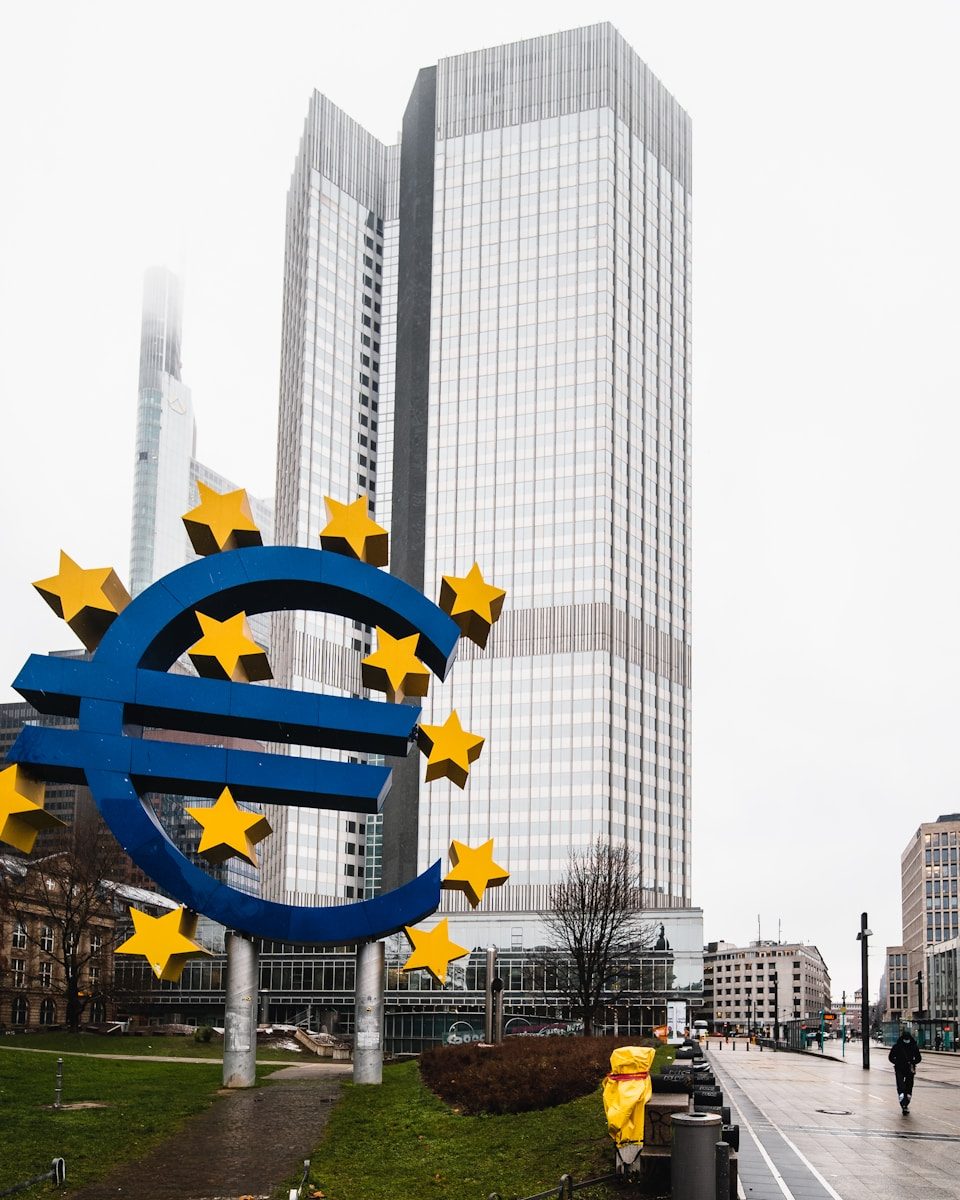
Economically, Europe is one of the largest single markets in the world, but in terms of company law it remains a patchwork of national rules. For innovative growth companies, this means that an EU-wide expansion requires dealing with a multitude of parallel requirements. This is often associated with time, cost, and legal uncertainty.
This is where the EU Commission’s EU Inc. comes in — and it is already the third attempt to establish a Europe-wide legal form for private companies. Earlier models such as the Societas Privata Europaea (SPE) and the Societas Unius Personae (SUP) were discussed but never politically realized.
The currently available European legal form, the Societas Europaea (SE), plays something of a special role in this context: in practice it is aimed more at larger international corporate groups, since the administrative burden is comparatively high, meaning the SE is also unsuitable as a European „standard vehicle.“
With the planned new legal form „EU Inc.,“ the EU is making a fresh attempt to noticeably speed up the founding of SMEs and growth in the single market. The corresponding draft EU regulation has been on the table since March 2026.
This article breaks down the key points of the proposal in an accessible way and explains how it will proceed through the EU legislative process.
What is EU Inc. — and what does the „28th regime“ stand for?
EU Inc. is designed as a corporate entity with its own legal personality and limited liability. It is intended to be available in all member states without replacing national company forms (GmbH, SAS, etc.).
The slogan „28th regime“ used by the EU means: an EU-wide harmonized legal framework is added as an additional option alongside the 27 national legal systems.
The harmonization primarily targets company law. In other areas, national law remains relevant as a complement. In particular, this could lead to new competition between member states on tax matters. Specific labor law aspects may also remain relevant.
The key points of the draft regulation
Digital incorporation as the standard
The draft relies on „digital-only“ processes throughout the entire lifecycle — particularly for incorporation, register communication, and standard documents. The goal is a uniform digital procedure (with electronic identification/signatures).
Fast-track incorporation: max. €100 and registration within 48 hours
For standardized fast-track incorporation, the draft combines two clear goals: a maximum of €100 in incorporation costs and registration within 48 hours.
Cost: A maximum amount of €100 is to apply to the fast-track procedure.
Time: Incorporation and registration are to be completed within 48 hours under the standardized procedure.
Important: The 48‑hour‑deadline only applies to the „standard case“ with predefined online‑forms and template documents. If the incorporation deviates from these standards (e.g. special provisions in the articles of association or unusual circumstances), it still proceeds digitally but may take longer than 48 hours.
No minimum share capital
A fixed minimum capital is not intended to be required for EU Inc. Instead of classic par-value shares, No‑Par‑Value‑shares are envisaged, i.e. shares without a fixed par value.
In place of classic capital maintenance, a two-stage protection mechanism for creditors takes its place. Distributions to shareholders are to be permitted only if two tests are met:
Balance‑Sheet‑test: Assets still exceed the sum of liabilities and capital even after the distribution.
Solvency‑test: The company can meet its due liabilities in the ordinary course of business within the twelve months following the distribution.
If management violates these requirements, it is to be held personally liable, and shareholders must repay any distributions unlawfully received.
Simple digital share transfers
Particularly relevant for companies: shares in an EU Inc. are, in principle, to be freely transferable and fully transferable online.
Under the draft, member states are not to be permitted to introduce additional formal requirements for the validity of a transfer, in particular no notarization requirement (i.e. no notarial certification). For German practice, this would be a genuine paradigm shift: the notarial certification currently required for GmbH share transfers (Section 15(3) of the GmbHG) would no longer apply to EU Inc.
Flexible employee participation (EU-ESO)
The draft contains an EU-wide usable framework for employee participation, known as the EU Employee Stock Option Plan (EU‑ESO). The aim is to make employee participation usable on a standardized (and tax-harmonized) basis across the EU, in order to make cross-border programs simpler and more predictable.
For the EU, this is primarily about attracting internationally sought-after talent to the member states. For companies, it is mainly about recruiting and retention: if an ESO is regulated more uniformly across the EU, participation can be offered more easily and predictably, including to employees in other EU countries. At the same time, options help retain employees longer, since the benefit is usually only realized after a certain period (e.g. through vesting, meaning the options are „earned“ gradually — those who leave earlier often only receive the portion already earned).
How does the legislative process proceed from here?
The draft is proceeding through the ordinary EU legislative procedure. Typical sequence:
Deliberation in the European Parliament (committee work, amendments, report, plenary vote).
Deliberation in the Council of the EU (member states) in working groups, followed by agreement on a negotiating mandate.
Trilogue negotiations between Parliament, Council, and Commission until a compromise text is reached.
Formal adoption and publication in the Official Journal.
As a regulation, the legal framework generally applies directly in the member states. In practice, however, technical and organizational implementation is still required (register connectivity, digital templates, processes). Only after that is EU Inc. actually usable.
Conclusion
EU Inc. is intended to create an optional, EU-wide uniform legal form that consistently digitalizes incorporation and equity processes. Key promises: fully digital incorporation, max. €100 in costs, 48-hour fast-track, no minimum capital, limited liability, digital share transfer, and standardized employee participation (EU‑ESO).
In the legislative process, the detailed work between the European Parliament and the Council now begins. What matters is how these good intentions are put into practice. In terms of digital infrastructure, the EU is likely facing a major challenge.
In the same category
-

Human Resources
International
Mergers & Acquisitions
14 September 2026
Consultation of the Works Council (CSE) in Cross-Border Merger and Acquisition Transactions
-

International
07 August 2026
The French “bail à construction” and German “Erbbaurechtsvertrag” – same economic purpose, different legal concepts
-

International
Products & Services
29 July 2026
The new European directive on liability for defective products: what are the stakes for businesses?

